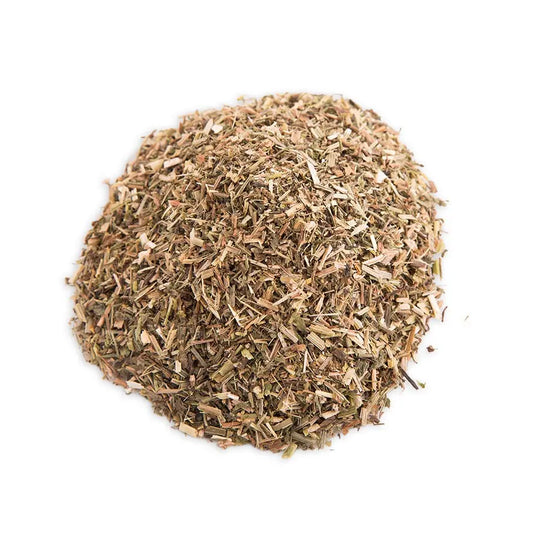
Patchouli Leaf (Pogostemon cablin) – Traditional Grounding-Earth & Skin-Nurturing Tonic Pharma Germania

PHARMA GERMANIA

Patchouli Leaf | Loose Leaf Herb – Pharma Germania

75 g
R 81.60 ZAR
Free shipping on orders over R850

Ground. Nourish. Stabilise.

Pogostemon cablin is a warming, resinous herb traditionally used to soothe dry and stressed skin, settle scattered energy, and foster a sense of deep, earthy calm and centred presence.

Why Patchouli Leaf?

  • Skin Restoration: Patchoulol and resins soothe dry, cracked, or reactive skin, helping to restore suppleness and protect dermal integrity from oxidative stress.
  • Emotional Grounding: Deep, woodsy volatile oils (bulnesene, seychellene) anchor scattered energy and calm a busy or anxious mind with their persistent, stabilising presence.
  • Aromatic Depth: A sophisticated, complex aroma that adds earthy richness to tea blends, aromatic baths, and DIY skincare formulations.
  • Systemic Stability: By warming and anchoring, it resolves airy, restless states and encourages a steady, reliably grounded equilibrium.
  • PayFast Instant EFT
  • mobicred
  • Ozow
  • Mastercard
  • Visa

  • FREE SHIPPING

    Orders over R850 to your door.
  • 14 DAY RETURN

    Easy returns on eligible items.
  • SAFE PAYMENTS

    Shop with confidence.

Traditional Benefits

Pogostemon cablin (Patchouli) is a master of grounding. Classified in traditional herbalism as "warming, drying, and deeply earthy," it is respected for its specific affinity with the skin and the emotional "centre." It acts as a "stabiliser," helping to resolve sensations of mental volatility, restlessness, or physical dryness with its rich, resinous presence.

Core Bioactive Markers:

  • Patchoulol: The "heart" of the Patchouli. This primary sesquiterpene is the source of the herb’s iconic, deep-earthy fragrance and is traditionally linked to its ability to soothe the senses and calm the mind.
  • Volatile Oils (Bulnesene, Seychellene): These complex aromatics contribute to the herb's signature "heaviness," which is traditionally valued for its ability to ground scattered energy and soothe the spirit.
  • Flavonoids: Provide foundational antioxidant support, helping to protect skin tissues from environmental oxidative stress and supporting long-term dermal health.
  • Resins: Offer a protective, soothing quality that helps to retain moisture in the skin, contributing to the herb's reputation as a restorative tonic for dry or irritated conditions.

Key Physiological Properties:

  • Skin Restorative: Traditionally used to soothe dry, cracked, or reactive skin, helping to restore a sense of suppleness and integrity.
  • Emotional Grounder: Its deep, woodsy aroma is a staple for those seeking to settle a "busy" or anxious mind, fostering a state of calm, centred presence.
  • Aromatic Stabiliser: Often used to "anchor" more volatile essential oils in blends, making it an essential part of the perfumer's and aromatherapist's toolkit.
  • Systemic Harmoniser: By warming and anchoring, it helps to resolve "airy-scattered" states, encouraging a state of steady, reliable, and deeply grounded equilibrium.

Therapeutic Benefits at a Glance

  • Skin Nutrition: Soothes dry, stressed, or weathered skin and supports dermal resilience.
  • Mind Grounding: Settles scattered energy and promotes a centred, calm presence.
  • Aromatic Depth: Adds a rich, earthy stability to herbal rituals and DIY formulations.
  • Tissue Integrity: Supports skin suppleness and protects against oxidative stress.
  • Systemic Stability: A foundational, earthy tonic for resolving restless or airy internal states.

How To Use

  • Infusion: 1 - 2 teaspoons of herb in 1 cup of boiling water. Infuse for 10 - 15 minutes. Strain and drink two to three times per day.
  • The Ritual: Best used as an "Anchoring Ritual." Drinking Patchouli tea is a slow, deliberate act of coming back to yourself. It is a moment to breathe in the deep, earthen aroma, feel your feet on the ground, and release the tension of the day in favour of quiet, steady presence.

Safety & Precautions

• Generally safe for most people.
• Do not use if pregnant or lactating.
• Not intended to diagnose, treat, cure, or prevent any disease.
• Keep out of reach of children.
FAQs

Isn't this just a perfume oil?

While the scent is famous, the leaf itself is a powerhouse in traditional herbal medicine! The essential oils that create the scent are the exact same compounds that provide its cooling, skin-soothing, and nervine benefits.

Is it effective for stress?

A: It is an incredible botanical for "mental heat"—when your mind is running too fast or you feel disconnected from your body, the deep, grounding aroma of Patchouli helps you slow down and return to centre.

Can I mix this with other herbs?

Yes, it is wonderful when blended with Rose for a "heart-centred" tea, or with Vetiver for the ultimate, earthy, grounding experience.

Shipping
• Free delivery on orders over R850 nationwide
• Courier delivery calculated at checkout for orders under R850
• Main centres: 2–4 business days | Outlying areas: 4–7 business days
• Orders processed within 1 business day (Mon–Fri)
• Tracking updates via email/SMS
• South Africa only — no international shipping
Returns
• 14-day returns accepted on sealed, unopened, unused items
• R100 flat-rate return shipping fee applies
• Final sale items are non-returnable
• Damaged items must be reported within 3 days of delivery (photo required)
• Refunds take up to 7 working days to clear

HOW TO PREPARE YOUR HERBS

infusion

Infusion (The Gentle Extract)

Best For: Flowers, leaves, and aerial parts.
Method: Steeping in hot (not boiling) water.
Goal: Preserves delicate oils and nutrients.
Feel: Mild, aromatic, and nourishing.
Think of this as an elevated tea ritual. Because leaves and flowers are delicate, boiling them can damage their beneficial essential oils and volatile compounds.

The Method: 
  • Pour hot (approx. 85°C–90°C) water over your herbs. 
  • The Time: Cover and steep for 5–15 minutes. Covering is key—it prevents the plant's aromatic oils from escaping with the steam. 
  • Best For: Chamomile, Lemon Balm, and delicate floral blends. 

Cold infusions

Herbs best suited for cold infusions are those high in mucilage (like marshmallow root) or those with delicate, volatile oils (like peppermint and lemon balm). Steeping these in cold water overnight extracts their maximum benefits and flavours while preventing bitterness and preserving sensitive phytonutrients. 

How to Prepare

Prep: Use a ratio of 1 tablespoon of dried herb (or 2 tablespoons fresh) per 1 cup of cold, filtered water.
Steep: Combine in a glass jar, cover tightly, and leave at room temperature or in the refrigerator for 6 to 12 hours (overnight is ideal).
Strain: Strain out the herbs thoroughly before drinking, warm water can be added to the drink if warm liquids is your preference. Do not heat in microwave.
cold_infusion
decoction

Decoction (The Deep Extract)

Best For: Roots, bark, seeds, and woody stems.
Method: Simmering in water over heat.
Goal: Softens tough fibres to release compounds.
Feel: Concentrated, earthy, and potent.

How to Prepare (The "Simmer")

This is a more intensive process for tougher materials. Roots, barks, and woody seeds are "locked" behind dense cell walls; a simple soak isn't enough to get the goodness out.
The Method: Place your herbs in a pot with cold water. Slowly bring it to a gentle boil, then lower the heat and simmer.
The Time: Simmer for 15–20 minutes. Keep the lid on to maintain the potency.
Best For: Yellow Dock, White Willow Bark, Wild Yam, and woody roots or dense seeds.

Herbal Poultice

  • Place the recommended amount of dried herbs into a bowl.
  • Add just enough boiling water to moisten the herbs, creating a thick paste.
  • Allow the mixture to cool until it is comfortably warm (not hot enough to burn the skin).
  • Spread the herbs evenly onto a clean piece of muslin, gauze, or cotton cloth and fold the cloth over to enclose the herbs.
  • Apply the warm poultice directly to the affected area for 15–30 minutes, or as needed.
  • Remove the poultice and discard the used herbs. Prepare a fresh poultice for each application.

Helpful Tips
Do not apply to broken skin, open wounds, or infected areas unless advised by a qualified healthcare practitioner. If irritation occurs, discontinue use immediately.
poultice